
What If You Came With Instructions?
Discovering your needs, is what makes your labels powerful.
For over 2,000 years, humans have written instructions for machines. We've never written them for ourselves. This is the story of the manual I finally wrote — five instructions, discovered one need at a time, that taught me how to operate the woman who is Kelly.
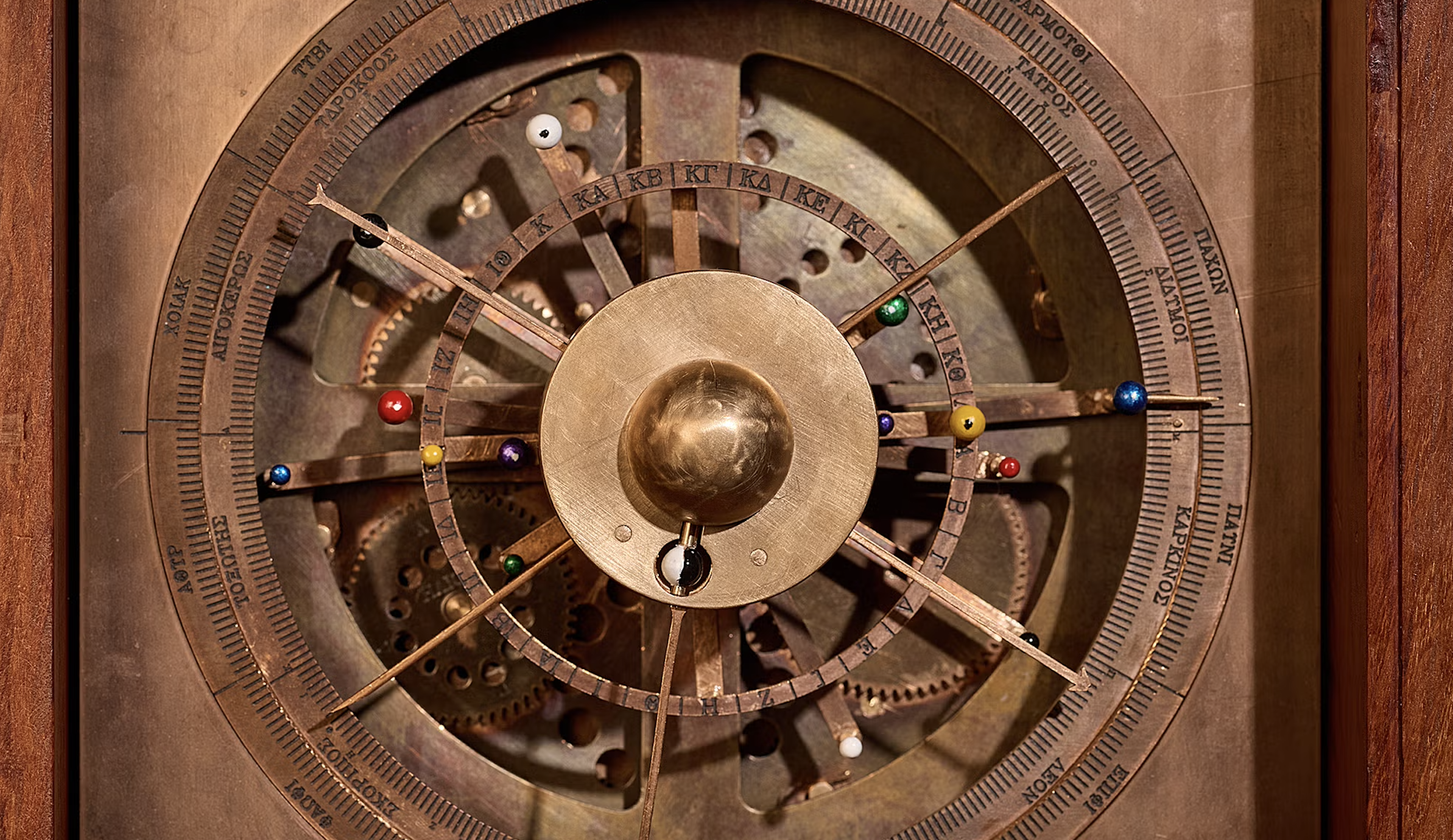
User guides have been around for over 2,000 years. Take this Greek analogue computer. On the cover of this device are passages of text which describe the features and operation of the mechanism. Thank goodness — because it sure looks COMPLICATED.
You know what else is complicated? In fact… infinitely more complicated than a computer?
Human beings.
Computers are made up of 0’s and 1’s. Humans are made up of emotions and stardust. And yet, we don’t come with a user manual… do we.
Any new parent will tell you they would have paid incredibly good money for a set of instructions, custom made for their new bundle of joy.
I know I would have.
Because in the depths of sleep deprivation, temper tantrums and food rejection… if someone could have told me that my daughter just needed to co-sleep & skip soft textured foods and all would be well, I would have done it.
—
Relatedly, not long after I became a pregnant, I found my own personal set of instructions were no longer accessible.
Psychologists call this matresence, I call this ‘being thrown into the fire that is motherhood’.
When you’re 6 weeks pregnant, you can’t have that cheeky glass of wine that regulates your nervous system at the end of a long day. You don’t want to eat the healthy foods that fuel your gut microbiome. You’d rather die than go to that spin class, where you’d vomit and/or pass out.
When you’re 6 weeks postpartum, you cannot fathom separating from your newborn to go to that gig you booked tickets to before you gave birth. You do not want anyone — even family — in your house, as attending to yet another persons needs is complete out of reach. Even more so, you can’t imagine leaving the house with your newborn to go to that friends birthday party, because if fragile routine you’ve just finally created breaks you might break too.
This is my story.
I loved a drink. I lived for thai food. I breathed Soulcycle.
I did manage to see Sofi Tukker with boobs full of breastmilk. I told family they weren’t allowed to visit 1 day post birth. I had a nervous breakdown the day of the friends birthday party.
Life continued on this way for another year or so. Until one day, on the streets of Tokyo my partner lovingly said to me “it’s time. you need to talk to someone”.
A few hours later, while watching thousands of people meander a through Shibuya Crossing, I realized he was right.
But the person I needed to talk to wasn’t a therapist. It was myself.
—
Therapists are great. I’ve worked with many. But (good) therapists are there not to discover you, they are there to help you discover yourself.
And not for the sake of self discovery. But so you (finally) understand what your real self needs.
I know, this is an impossibly abstract concept.
The impossibly abstract concept I was able make simple.
Because in that moment at Shibuya Crossing, what I saw below me wasn’t chaos… when it should have been. Thousands upon thousands of people elegantly wove between each other. They made the impossible, feel possible. They made the complex, feel straightforward.
Take a step. Oop! A person! Adjust. Continue onwards. And so on and so forth.
I just needed to take a step. What I was doing sure as hell wasn’t working. And so I did.
I took a nap.
Radical. I know!
But being me — for as long as I can remember — means I need to nap at least once a week.
And I hadn’t, for a long time.
I’m one of those people that’s designed for naps. Five minutes. Two hours. Doesn’t matter. I wake up feeling so much better. More… myself.
So, friends, I was able to write line one of my user manual:
Nap when you’re tired.
The first line in the set of instructions that make me feel like me.
—
You might be thinking… well that feels simple, Kelly.
Yes, it is really that simple.
This is the original version of my User Manual.
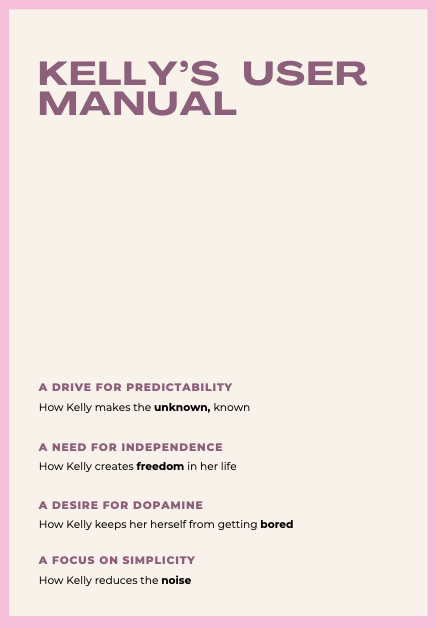
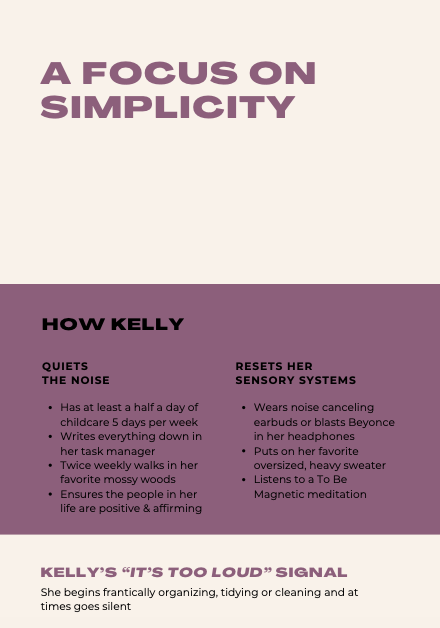
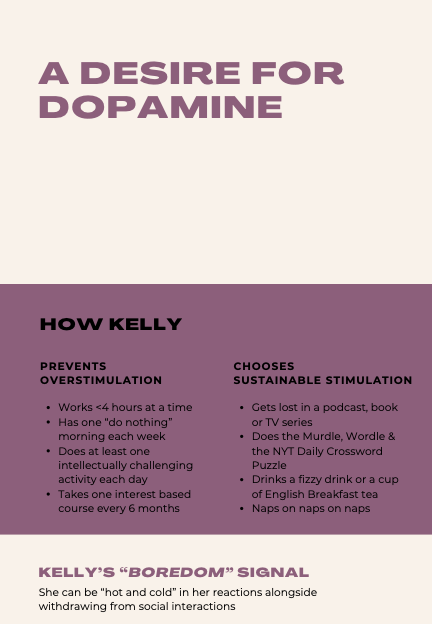
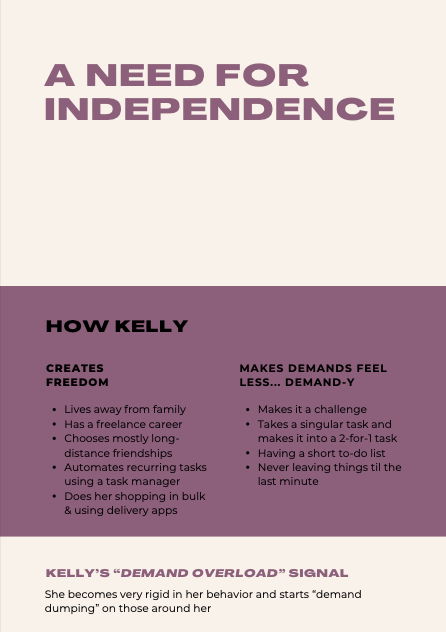
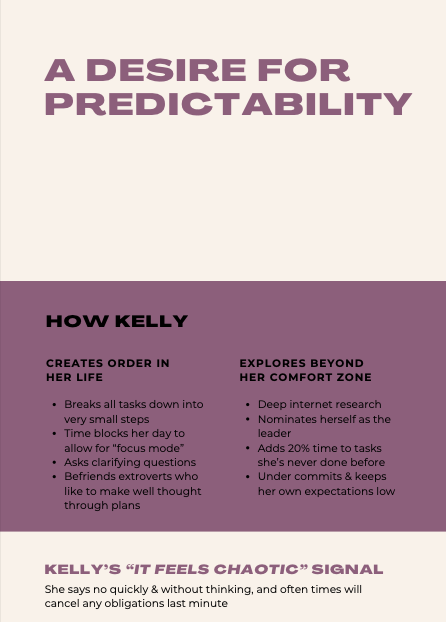
It’s… directionally correct. Surprisingly so. I’ll tell you about the thing it was missing at the end. It’s the thing that allowed me to create a much simpler final version. One with just 5 steps to operate the woman who is me, Kelly Snodgrass.
Because if you know me, you sure as hell know I’m not going to follow IKEA furniture instructions. In fact, if there’s more than 5 steps I will refuse to open the instructions at all. A limiting factor of my life (just ask my partner to tell you about the Lasagna Incident 🍝 ) but … hey it’s who I am.
And when we’re talking about operating complex human beings, well, if you get sucked into the detail then you’ll continue to spend your life spinning around, hopping from thing to thing and trying to see what sticks.
This is what the first version of my user manual got right! The 4 needs I have.
Predictability. Simplicity. Dopamine. Independence.
I arrived at these through the lens of my Autism diagnosis. But many of my neurotypical (yet still ambitious and overstretched) friends have told me, they apply to them too.
Because for those of us who desire something in the world, we prioritize at least a few of these things. The question you need to ask yourself, is if you — your true self — needs them.
—
So this begs the question many friends, coaches and therapists asked me over the years. Do you know who you are? Can you name your values? A metaphor that embodies your energy? The dreams you might dare to write on the pages your diary?
Hard questions, yes. But I had to ask myself… what’s harder?
Powering through the nervous system alarms and bone crushing exhaustion from a day of responding to others beck and call as if I was a real life marionette doll?
Or committing to spending a few minutes each day considering what my top need was that day (honored or not).
Because this is how I made my first User manual. Every day, I thought of one thing I did that I well and truly felt I needed.
Buying a kombucha when drinking water felt like a demand I couldn’t face. Binging The Mentalist for 3 hours after my daughter went to bed, even though there was work to be done. Pulling up Google street view to get a sense for how my new friend’s neighborhood felt, even though I was told it was safe. Feeling sad that I didn’t drag myself down to my favorite woods walk, when I know making time for it could have prevented an argument with my partner.
Coming up with your personal set of instructions is as simple as coming up with it for your newborn (if you’ve have one). It’s takes care, and time.
So I started paying attention. Not to my daughter's needs — but to mine.
Let me tell you about the rest of the points in the final version of my User Manual. Because they’re more… me than naps 🙃
—
The other label I carry with pride is being gifted. I have a high IQ. A gift that was once a curse.
So in my user manual at number 2… drumroll please…
2. One intellectual stimulating project, on rotation
The key here is on rotation.
Because for a decade I outsourced this very very very important need of mine to a company.
In 2019, I realized I had reached a level of leadership where I was constantly teaching. I wasn’t learning! I was in a mind stimulation drought!
Being completely transparent, this sent me to some of my lowest lows since my teenage years. I flirted with the eating disorder that visited me in high school. I could hardly leave the house, I was so void of energy.
This intense violation of my need sent me down the path of starting my own business and beginning my life long love of taking courses for the sake of it.
Coaching. Psychology. Spirituality. Reiki. Writing. Painting.
I find an edge that has equal parts fear and excitement, and I explore it. I meet badass likeminded people while I do. And my brain & body fill with vitality.
I am gifted. I now I know, I must honor it. It’s the instructions I came with, after all.
—
Number three is again, potentially universal, but it caters to me being a highly sensitive person. Which means I need:
3. Twenty minutes to myself per day, and ten hours to myself (outside of the house) per week
I can’t process the world if I don’t. I must be alone. With no risk of interruption. Not 20 mins while my daughter watchrs Bluey.
Alone.
Sometimes life life’s, and this one isn’t perfect. But let me tell you… the cost is steep. So I got creative.
I bought myself a sofa for the garage as my “easy fix” to life life’ing recently. So even if my time out of the house is in the evenings, after the kids go to sleep, I can go to the garage and be in my own energy.
Easy as… if you let it be!
—
Ok, number four. This one’s a doozy. And again, super specific to me (though you might relate).
I have a profile of Autism called Pathological Demand Avoidance. Yes, it’s as intense as it sounds.
If I don’t want to do something, the cost to my nervous system is so high that I have a full blown fight response. Not fun for me. Not fun for those around me!
So the fourth instruction in my manual is;
4. Find a dual purpose for tasks that feel difficult (or break them down further)
I’ll take a really simple example to paint this instruction in 3D.
I always hated making dinner.
It’s stressful. There’s so many steps. So many decisions. At the end of a long day. My children were unpredictable. And so was I.
So, this was a difficult task. Everyday. Every week. All year! Yippie!
But it’s easy, if I follow my instructions.
So, I can do a whole bunch of things that transform this horrible task… into a magical one (for me). I can:
Teach / involve my daughter in cooking (dual purpose)
Make a dinners plan on Monday for the entire week (breaking into steps)
Have a glass of wine and turn on a music for a dance party while cooking (dual purpose)
Cook the first part of the dinner during my youngest’s morning nap (breaking into steps)
The list goes on and on… from the more practical to the more creative. When I forget to do this (or can’t access the wherewithal to achieve the steps I broke down), we end up at my final instruction. The most important one of all.
—
The final instruction required years of time between the first User Manual and the final one. Essentially, a lot of testing told me that something was missing. I felt like I had built myself a house of cards. One unexpected change and BAM I was living that marionette life again.
So the fifth and final instruction is what has allowed me to weather any change, storm, meltdown… you name it
5. Feel my emotions
I heard you groan! You want the boring back now, eh 🙃
Again, the wording is important here. Feel them. Not Process them. Not reframe them. Not transform them into power. Or writing. Or whatever other thing I was doing to avoid feeling them.
I found a beautiful therapist who called me out gently yet firmly here.
Because while we can write most of our own user manual, I believe the people we place around us should help us write it too.
Instructions for humans may have seemed a preposterous idea upon first finding this article.
I hope you now see that many of us let our labels be our instructions… when in fact, our labels need to define our needs. Because labels are our power, when we know how to wield them.